Is Using Two Languages Good or Bad for Children? What Culturally and Linguistically Diverse (CALD) Families Need to Know
About 28% of Australians are born overseas, and 22% speak a language other than English at home — making culturally and linguistically diverse (CALD) communities a significant part of the population. Despite this diversity, many myths about bilingualism persist. Here are some of the most common:
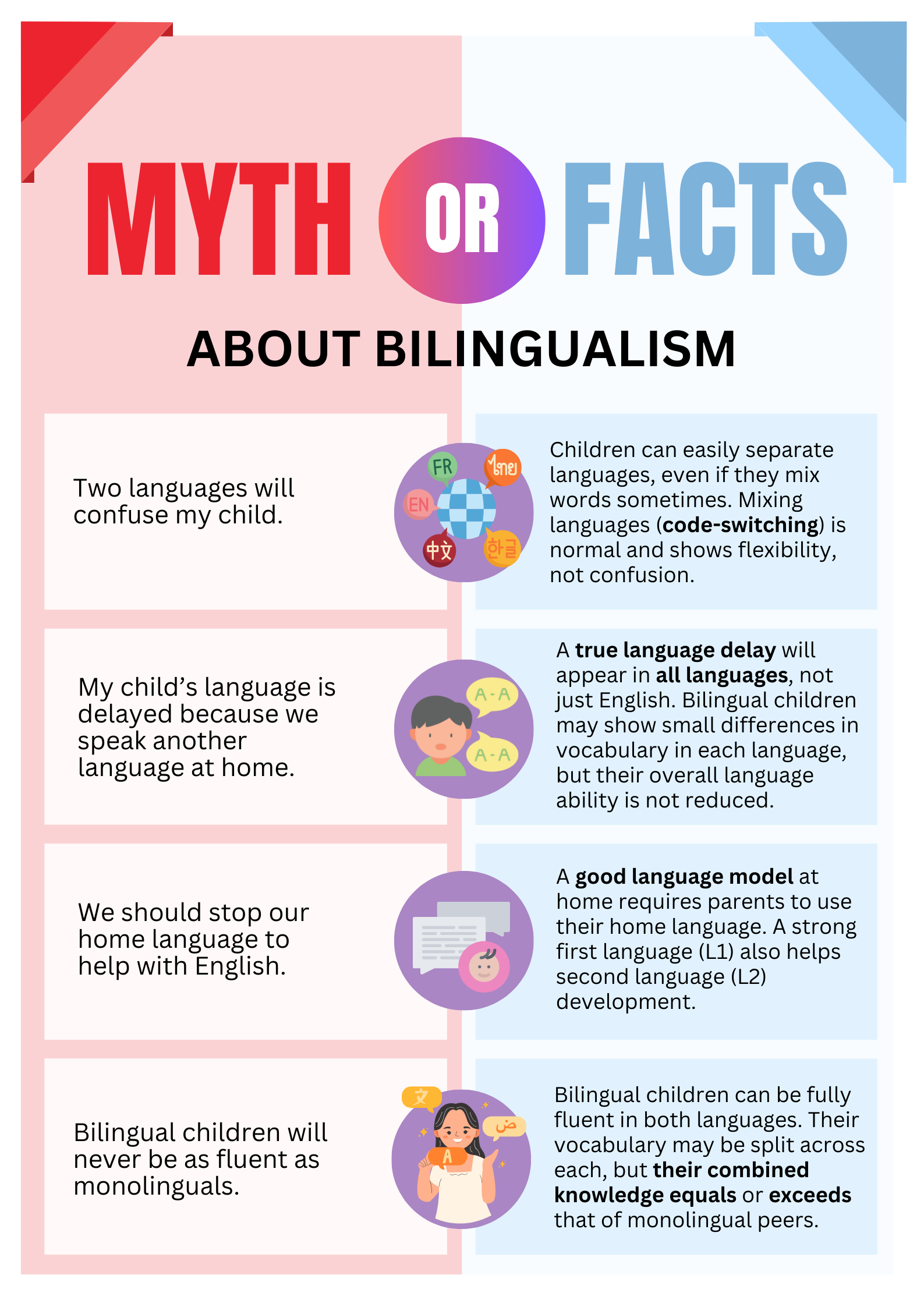
Families from culturally and linguistically diverse (CALD) backgrounds worry that speaking two languages at home might confuse their child or slow down their speech development. This is a very common concern — but the research is clear: Using two languages is not harmful. In fact, it’s beneficial. Children are capable of learning multiple languages from a very young age. Their brains are designed for language learning, and using more than one language at home does not cause speech delays, confusion, or long-term language difficulties.
What We Know From Research?
Decades of research from linguistics, psychology, and speech pathology consistently shows:
1. Two languages do not cause language delays. Bilingual children are not more likely to have speech or language disorders than monolingual children. In fact, Bilinguals often show stronger skills in attention control, problem-solving, and multitasking. Additionally, they develop a better understanding of how language works, which supports literacy and learning.
2. Children can learn multiple languages from birth. A child’s brain is incredibly capable of learning more than one language at the same time, even in infancy or toddlerhood. Birth to age 7 is often described as the critical period for language learning. During this time, children’s brains are highly flexible and can absorb multiple languages naturally, much like they acquire their first language. Exposure to two languages early helps children develop native-like pronunciation and intuitive grammar skills.
3. Bilingualism does not confuse children. Mixing languages (“code-switching”) is normal and healthy — even bilingual adults do it. For example: Can you pass me the lápiz?” (mixing English with Spanish for “pencil”). Bilinguals often engage in code‑switching because sometimes a word comes more quickly in one language than the other, making the switch a natural and efficient choice. Research also shows that bilinguals develop strong mental flexibility, which allows them to shift smoothly between languages without losing meaning or flow. Importantly, this switching is not random; it follows clear grammatical rules and structural patterns, demonstrating that code‑switching is a purposeful and organized aspect of bilingual communication.
4. Speaking your home language is a strength, not a risk. Children learn language best when caregivers use a language they feel comfortable and confident in. Removing the home language can actually reduce language input and make communication harder.
5. Bilingualism supports emotional and cultural connection. Using the home language helps children stay connected to family members, identity, and cultural traditions — all essential for social and emotional development.